











[ad_1]
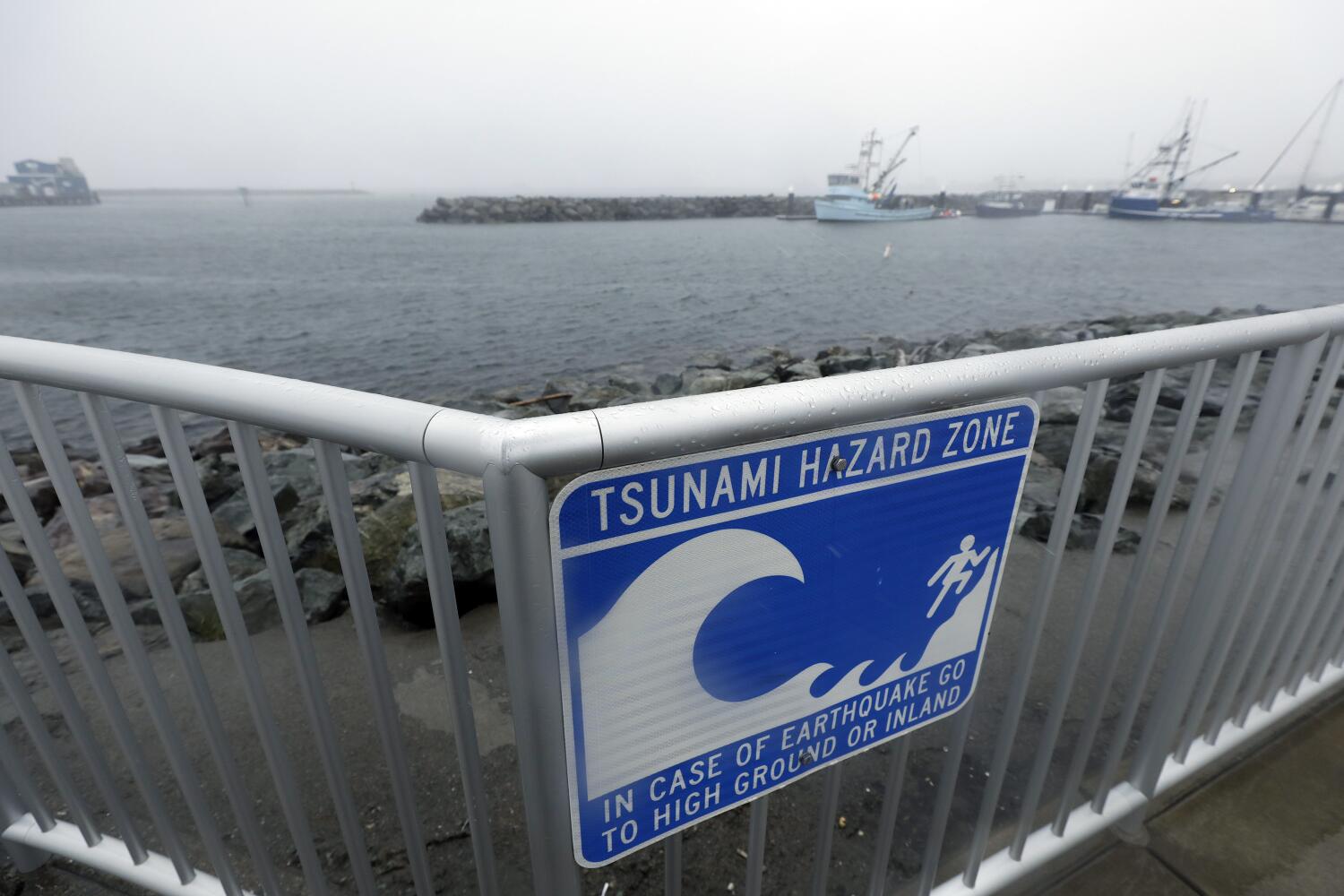

Residents along the Northern California coast were urged to evacuate immediately and seek higher ground Thursday morning after a magnitude 7 earthquake off the coast of Humboldt County triggered a tsunami warning.
A warning just before 11 a.m. warned that “a tsunami with harmful waves and strong currents is possible.”
However, the warning was lifted about an hour later.
For some, it felt like an emergency whiplash. Others remained confused.
But officials say they followed the correct procedures to respond to a potentially dangerous tsunami and should have given residents enough time to reach safety.
“We have to respect time to keep people safe,” said Dave Snyder, tsunami warning coordinator for Alaska’s National Tsunami Warning Center.
“The biggest challenge with the tsunami is we know that something big happened,” Snyder said of the earthquake. “We don’t know if a tsunami is actually occurring.”
Given the magnitude and location of the earthquake, his team immediately put in place procedures for a potential tsunami, with the first step being to issue as targeted a warning as possible.
“There are only two ways to know when a tsunami is occurring: deep-sea buoys and coastal observatories in ports. That’s it,” Snyder said. “We want to break that wave and we want people to move away…before that wave is observed.”
So while there was initially no certainty that the tsunami was heading toward the West Coast, all the ingredients for a tsunami were present, Snyder said. The earthquake’s proximity to the California coast made it especially urgent to begin evacuations. That’s because if a tsunami were to occur, it could hit much faster than an earthquake far offshore, he said.
“We are fully responsive to this earthquake,” Snyder said.
After issuing the warning, his team spent the next 30 minutes to an hour trying to understand the quake’s “fault mechanism” to determine how it shook the Earth, confirming its magnitude, and setting up buoys and Monitor coastal observation posts for further signs of a growing tsunami. All these factors supported the positive news that there was no major tsunami and no signs of danger. The warning has been cancelled.
He knows the back-and-forth can be frustrating, but he wants people to understand that it’s better to be overprepared than the other way around.
“The public feeling is, ‘Why did we evacuate if nothing happened?'” Snyder said. “No, you did the right thing. …You could have moved quite a bit of water. I’m glad you didn’t.”
Snyder said shortly after the tsunami warning was lifted, his team determined that a small tsunami (measured at 5 centimeters) had occurred at Arena Cove off the coast of Mendocino County.
“Something certainly happened on our planet, something significant happened,” Snyder said.
During the hour-long tsunami warning, authorities in Del Norte, Humboldt, Mendocino, Berkeley and San Francisco urged people along the coast to evacuate inland.
At Fort Bragg, boat owners were rushing to move their boats out of the harbor.
Sirens blared in Ferndale, signaling the need to evacuate.
In San Francisco, firefighters drove up and down the coast, shouting at people to “clear the coast, tsunami warning!”
Dan Benihura was walking his dog on the beach before firefighters arrived. He said the warning felt similar to the tsunami scare from decades ago, but he recalled that “nothing happened.”
The water looked normal Thursday, just like it did then, he said.
But Snyder urged people not to ignore such warnings or head to the beach to watch the waves, which is still extremely rare.
“Let’s rethink what it means to live in tsunami country,” Snyder said.
Staff writers Ruben Vives, Jessica Garrison and Hannah Wiley contributed to this report.
[ad_2]Source link